The process From context to system in five steps. Each step has one job. It keeps the speed of AI without losing the coherence of the product.
-- 001 Listen. I map users, flows, data and business logic before I design anything. Judgment without context is just opinion.
-- 002 Define. I set the criteria a screen must meet before AI proposes anything. Evaluation becomes a check, not a guess.
-- 003 Direct. I work with whichever tools support an agentic workflow and fit your team. I steer their output toward your product and quality criteria. The tools generate. I decide.
See what tools I work with -- 004 Curate. I keep only what holds up and structure it into components and patterns. The system grows, without screens piling up.
-- 005 Hand Over. I deliver infrastructure your team builds on without me. Design, development and product share one reference.
When to bring me in. Signs your product needs a judgment layer.
You can't tell if what AI builds is good. The output looks fine, but no one can tell if it’s right, or if it actually works for users.
Your modules drift apart. Each team ships fast and the product stops feeling like one product.
AI generates faster than your team can review. Review becomes the bottleneck, or it gets skipped.
There's no shared reference. Designers, developers and PMs each work from their own version of "correct".
You need senior eyes, not an agency. You want a sharp, experienced outside view, for one sprint or for the long run.
Principles The rules I work by, whatever the tools.
-- 01 AI-enabled, not AI-replaced AI speeds up the work. Every decision that reaches your product is still made by a person.
-- 02 Apps over websites I design products people use every day, not pages they visit once.
-- 03 Systems over one-off screens Every screen becomes part of a system your team can reuse and extend, with or without me.
-- 04 Simplest viable solution If a simpler approach does the job, that’s the one I recommend. Fewer tools, fewer steps, less to maintain.
-- 05 Pragmatic, not hype-driven New tools earn a place in my workflow when they prove useful in real work, not when they trend.
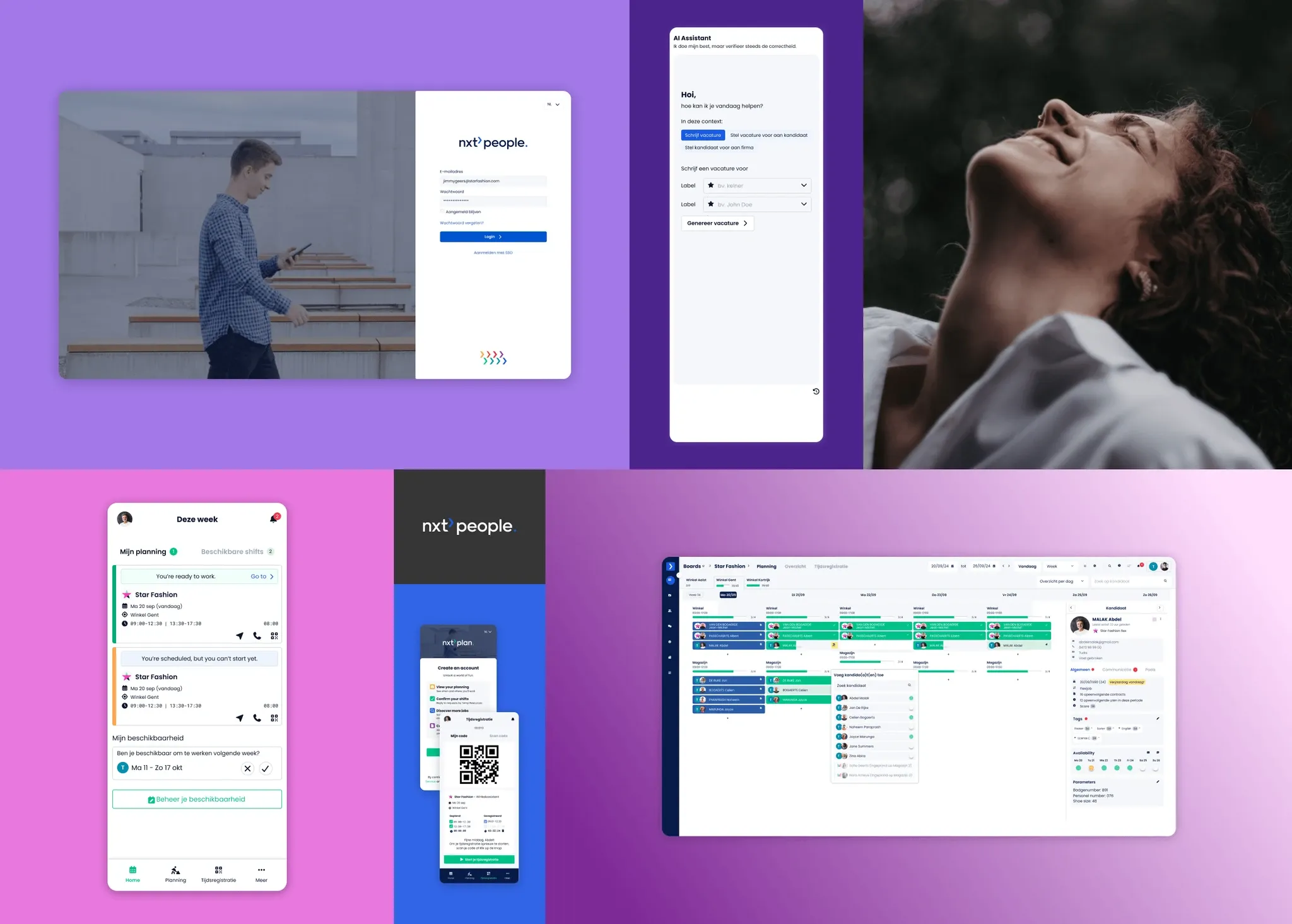
Multiple HR modules and GoTemp needed one consistent foundation.
Shared components, with semantic tokens separating brand from function.
Separate libraries per product: more maintenance, less consistency.
One system for NxtPeople and GoTemp. New screens reuse shared components.
Read the case ↗ All cases → Start with step one A fixed-price diagnosis of your product: what holds up, what doesn’t, and what to fix first.
Book a call